Duplex ultrasound uses sound waves to get images of your blood vessels. It also helps determine the speed and the direction of blood flow through the vessels. Your doctor may want to do a duplex ultrasound to find out if you have any problems with the vessels that carry blood to and from the major organs in your body.
Before your test
Here's what you can expect:
-
Follow instructions you are given to prepare for the test. If you are told to not eat or drink before the test, follow these directions carefully. If you don't, your test may need to be rescheduled.
-
Tell your doctor what medicines you are taking. Ask if you should stop taking any of these medicines before the test. Also, bring a list of your medicines on the day of your test to show the technologist.
-
Allow yourself enough time to check in.
What to tell the technologist
Tell the technologist if you’ve had:
-
A previous procedure, such as a bypass, balloon angioplasty, or stent placement.
-
Symptoms of stroke, including sudden short-term loss of strength, speech, or vision.
You may be asked other questions about your health. The information you give helps the technologist be sure the test is safe for you.
During your test
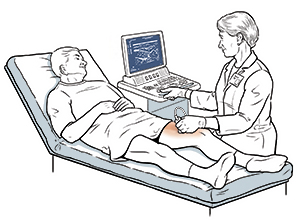
The duplex ultrasound is done in an ultrasound lab. The lab may be in your doctor’s office, a hospital, or an outpatient imaging center. The test is typically done by a vascular technologist. It can take from 15 minutes to 2 hours, depending on what’s being tested. During your test:
-
You may be asked to change into a hospital gown or to remove clothing from the area being examined.
-
You will likely lie on an exam table.
-
A gel is applied to the area being tested. This helps sound waves move through your skin.
-
The technologist slides the ultrasound probe (transducer) over the gel.
-
You may hear a “whooshing” sound. This is the sound of your blood flowing. You may also see tracings of your blood flow on a screen.
-
A blood pressure cuff may be put on your arm or leg and inflated during the test.
-
You may be asked to stand up or even exercise during the test.
Be aware that
Be prepared for the following:
-
The gel will feel wet. It won’t harm your skin or clothing, but it’s a good idea to wear washable clothes.
-
The pressure from the probe may feel slightly uncomfortable. If you have any pain, tell the technologist.
After your test
Here is what to expect:
-
Before leaving, you may need to wait briefly while your images are being reviewed.
-
You can return to normal activities unless your doctor tells you not to.
-
Your doctor will let you know when the test results are ready.
Online Medical Reviewer: Anne Fetterman RN BSN
Online Medical Reviewer: Deepak Sudheendra MD
Online Medical Reviewer: Raymond Kent Turley BSN MSN RN
Date Last Reviewed: 05/01/2025
© 2000-2026 The StayWell Company, LLC. All rights reserved. This information is not intended as a substitute for professional medical care. Always follow your healthcare professional's instructions.