You and your healthcare provider can talk about what treatment may be best for your warts. Treatment will depend on your age, your health, and the type of wart. To get rid of your warts, you may need to try more than 1 type of treatment. The methods described below are often used to treat warts.
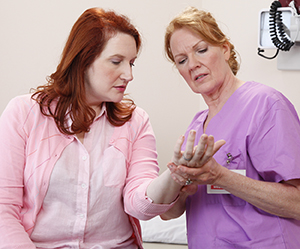
Types of treatment
-
Do nothing. Most warts will go away on their own without treatment. So doing nothing is sometimes a good choice. This is particularly true for smaller warts that aren't causing symptoms. But genital warts should always be treated.
-
Cryotherapy (liquid nitrogen). This kills skin cells by freezing them. It kills the warts and destroys skin infected by the wart-causing virus. This is done in your provider’s office and may cause some mild pain. It may take several treatments over a few weeks or months to get rid of the warts.
-
Topical medicines. Prescribed topical medicines can be put on the skin. These are often applied in the provider's office. But some prescriptions may be applied at home.
-
Over-the-counter (OTC) topical treatments. OTC medicines that most often contain salicylic acid may be an option. These patches, liquids, and creams are used at home. The medicine is applied daily to the wart and nearby skin. It's often left on overnight. The dead skin is filed down the next day. In 1 to 3 days, the procedure can be repeated. Topical treatments are sometimes combined with cryotherapy.
-
Electrodessication and curettage (ED & C). For this procedure, the provider puts numbing medicine on the wart. Then the wart is scraped or cut off. An electrical current is then used to remove certain skin cells.
-
Laser treatment. This can vaporize wart tissue or destroy the blood vessels that feed the wart. This is done in your provider's office. They'll numb the wart first.
-
Shots (injections). These can be used to treat warts that don’t respond to other treatments. This is done in the provider’s office. The provider may inject a medicine called bleomycin. Or they may use immunotherapy medicines that can help your body's immune system clear the wart.
When to get medical treatment
It’s a good idea to have your healthcare provider check your warts. That way they can rule out any other skin problems. Sometimes a callous, a corn, or even a skin cancer can look like a wart. But the treatments may differ. Treatment can also provide relief from warts that bleed, burn, hurt, or itch. Genital warts should always be treated. They can spread to other people through sexual contact. And they may cause genital or cervical cancer.
After treatment
After having your warts treated, new warts may return to the same site or a new site. Don’t be discouraged. Warts often come back since there is no known cure for the wart virus. See your healthcare provider again to talk about this. They can tell you about the treatments that most likely will help clear your skin of warts.
Online Medical Reviewer: Chris Southard RN
Online Medical Reviewer: Rita Sather RN
Online Medical Reviewer: Ronald Karlin MD
Date Last Reviewed: 03/01/2024
© 2000-2025 The StayWell Company, LLC. All rights reserved. This information is not intended as a substitute for professional medical care. Always follow your healthcare professional's instructions.