Genital warts sometimes go away on their own, stay unchanged, or grow in size and number. Depending on where the warts are, some treatments may work better than others. These treatments may remove the wart. But the virus that caused the wart often stays in the skin. And there's a chance of the warts returning.
Vaccine information
There is a vaccine that can prevent HPV and HPV-linked cancers. It's now given to children as part of their routine vaccines usually starting by age 11 to 12 years. It can be given to children as young as age 9. To work best, the vaccine should be given before the first possible exposure to the virus. The HPV vaccine protects against cervical (and rectal) cancer associated with certain HPV stains. The vaccine is approved by the FDA for some people up to age 45, but is not usually recommended for adults over age 26. Talk with your health care provider to learn more.
Medicines
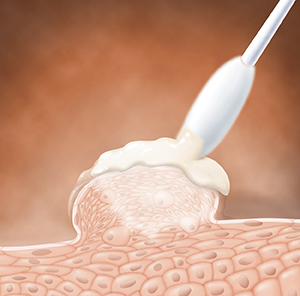
Prescription creams and gels can be applied to warts and nearby skin. Some prompt your immune system to fight against HPV (human papillomavirus), the virus that causes genital warts. Others are strong substances that destroy warts. Medicines can be applied at the provider's office or at home. Often more than 1 dose is needed. These treatments sometimes cause skin rashes. Talk with your provider about possible side effects.
Wart removal
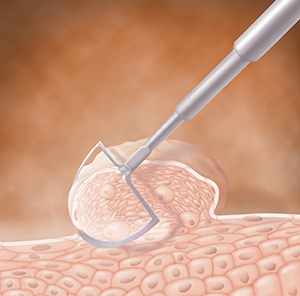
Warts can be removed in many ways. These include freezing, heat (cautery), lasers, and surgery. These procedures are done by your regular provider or a specialist. Before treatment, you may be given local anesthesia to numb the area. The number of treatments depends on how many warts are being removed. Your provider can give you more details.
Online Medical Reviewer: Barry Zingman MD
Online Medical Reviewer: Marianne Fraser MSN RN
Online Medical Reviewer: Raymond Kent Turley BSN MSN RN
Date Last Reviewed: 02/01/2025
© 2000-2025 The StayWell Company, LLC. All rights reserved. This information is not intended as a substitute for professional medical care. Always follow your healthcare professional's instructions.