Cesarean section (C-section) births can be planned. But in most cases, a C-section is not expected. A C-section may be needed because of concerns about the baby, the pregnant person, or the baby’s passage through the birth canal. Listed below are some of the reasons you may have a cesarean section:
-
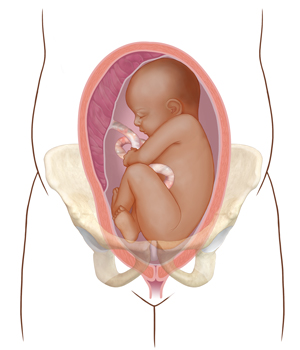
A poor fit. The baby’s head is poorly positioned or too large. This may prevent the baby from fitting through the birth canal.
-
A baby in distress. The baby shows signs that they may not be able to stay healthy through the stresses of labor.
-
Labor fails to progress. The cervix does not thin (efface) and open (dilate) enough. So the baby can't descend into the birth canal.
-
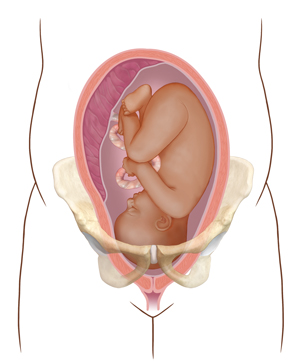
The wrong position. The baby is facing feet or buttocks first (breech position). Or the baby is lying sideways across the pelvis.
-
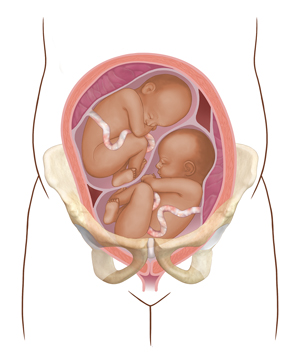
More than 1 baby. With two or more babies, one is more likely to be in the wrong position.
-
Problems with the placenta. The placenta is the organ that nourishes the baby. In some cases, the placenta is between the baby’s head and the birth canal (placenta previa). Or it is pulling away from the uterus (placental abruption).
-
Problems with the cord. In some cases, the umbilical cord is compressed by the baby's head. Or it enters the birth canal before the baby's head.
-
Maternal health problems. An ongoing health problem or a problem that happens during pregnancy can make a vaginal birth risky.
-
A baby with special needs. A health problem or birth defect can make labor or vaginal birth risky.
-
An active vaginal infection. Herpes and HIV infections could infect the baby during the passage through the birth canal.
Online Medical Reviewer: Donna Freeborn PhD CNM FNP
Online Medical Reviewer: Heather M Trevino BSN RNC
Online Medical Reviewer: Irina Burd MD PhD
Date Last Reviewed: 12/01/2022
© 2000-2025 The StayWell Company, LLC. All rights reserved. This information is not intended as a substitute for professional medical care. Always follow your healthcare professional's instructions.