This sheet will help you better understand nephritic syndrome. Knowing more about this condition can help you make the best decisions about treatment. If you have any questions or concerns, talk with your doctor. They are here to help.
What is nephritic syndrome?
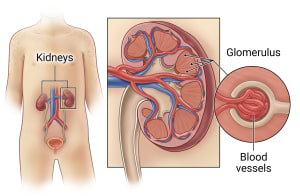
Nephritic syndrome is a condition that occurs from kidney damage. You have 2 kidneys. Inside your kidneys are small structures called glomeruli. The glomeruli filter out waste and extra fluid from your blood. If they become inflamed and injured, they no longer work correctly. That can lead to nephritic syndrome.
Nephritic syndrome can occur suddenly. This is called acute nephritic syndrome. It can also develop slowly over many years. It’s then called chronic nephritic syndrome.
What causes nephritic syndrome?
Nephritic syndrome may occur after an infection from a virus, bacterium, or parasite. The most common is strep throat. Diseases that affect the immune system, like lupus and Goodpasture syndrome, can also cause damage to the glomeruli.
In some cases, the cause of nephritic syndrome may not be known. It can be genetic, running in families.
What are the symptoms of nephritic syndrome?
The symptoms of nephritic syndrome can vary from person to person. You may have no symptoms. In this case, you may have been diagnosed with the condition because of the results of a urine (pee) test.
If you have symptoms, they can range from mild to severe. They may include:
-
Pink, red, or brown pee, a sign of blood in your pee
-
Foamy pee, a sign of excess protein in your pee
-
Trouble peeing
-
High blood pressure
-
Swelling of your hands, feet, or face
-
Fatigue
How is nephritic syndrome treated?
Your doctor will talk with you about your treatment options. These will depend on things like your age, your overall health, and your preferences. They will also depend on the cause of the syndrome. Together, you and your doctor can decide what treatment is best for you.
Acute nephritic syndrome may go away on its own. That may be the case if it is caused by an infection that gets better over time. Children are more likely to recover from this type without treatment.
More often, though, treatment is needed. Treating acute or chronic nephritic syndrome can prevent serious kidney damage, even kidney failure.
Treatment for nephritic syndrome may include:
-
Medicines. Your doctor may give you medicines to treat what is causing the syndrome, such as an infection. You may also be given medicines to reduce swelling, inflammation, or blood pressure.
-
Changes in what you eat and drink. To help with chronic nephritic syndrome, your doctor may advise cutting back on foods high in sodium and potassium. They may also tell you to limit fluids to reduce swelling.
-
Dialysis. If your kidneys are not working well, your doctor may advise dialysis. This treatment helps remove liquid waste and extra fluids for your kidneys.
-
Plasmapheresis. This treatment uses a machine to filter out high amounts of protein from your blood.
What are the complications of nephritic syndrome?
Nephritic syndrome can sometimes lead to other health problems, such as:
-
Kidney failure
-
Uncontrolled high blood pressure
-
Heart failure
What can you do to feel better?
Work closely with your doctors. They are here to support you in your treatment decisions. It’s also helpful to take an active role in your care, such as:
-
Keeping all appointments
-
Getting regular screenings or other tests
-
Cutting back on foods high in sodium and potassium, if advised to do so
-
Getting treatment for active infections
-
Seeing a doctor as soon as possible if you think you may have strep throat
When to call 911
If at any time you have the following, call 911 right away:
-
Trouble breathing
-
Chest pain
When to call your doctor
Reach out to your doctor right away if you have any of these:
-
Fever of 100.4°F (38°C) or higher, or as directed by your doctor
-
Symptoms that don’t get better or get worse
-
New symptoms
Date Last Reviewed: 05/01/2025
© 2000-2026 The StayWell Company, LLC. All rights reserved. This information is not intended as a substitute for professional medical care. Always follow your healthcare professional's instructions.