Strains happen when a muscle or tendon twists, pulls, or tears. A tendon is a fibrous cord of tissue that attaches muscles to bone. Sprains happen when a ligament stretches, tears, or both. A ligament is a strong band of tissue that connects the end of one bone with another.
These injuries can cause bruising, swelling, and pain. Treatment may depend on how bad your injury is. To ease your discomfort and speed the healing of your strain or sprain, protect the injured area and follow the tips below. A strain or sprain can take 6 to 8 weeks to heal.
Important note
Don't give aspirin to children or teens without discussing it with your doctor first. It can cause a life- threatening illness.
Rest
- Rest the injured area by not using it for
24 to 48 hours. - Return slowly to your normal activities. Rest the injured area often.
- Don't use or walk on an injured limb if it hurts.
Ice first, heat later
- Use ice for the first
24 to 72 hours after injury. Ice helps prevent swelling and reduce pain. Don't put ice directly on your skin. To protect your skin and prevent skin damage, wrap the bag of ice in a clean, thin towel or cloth. Ice the injury for no more than20 minutes at a time every2 to 3 hours. - Apply heat after the first
72 hours once the swelling has gone down as directed by your doctor. Heat relaxes muscles and increases blood flow. Soak the injured area in warm water or use a heating pad set on low for no more than15 minutes at a time.
Wrap and elevate
- Wrap an injured limb firmly with an elastic bandage. This provides support and helps prevent swelling. Don't wear an elastic bandage overnight. Watch for tingling, numbness, or increased pain. Remove the bandage immediately if any of these occurs.
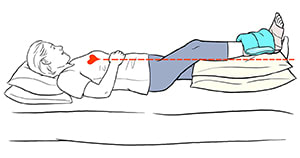
- Elevate the injured area to help reduce swelling and throbbing. It's best to raise an injured limb above the level of your heart.
Medicines
- Over-the-counter medicines, such as acetaminophen or ibuprofen or naproxen, can help reduce pain. Ibuprophen and naproxen also help reduce swelling.
- Tell your doctor if you have stomach ulcers or bleeding in your GI tract, kidney disease, or take blood thinners before taking NSAIDs, such as naproxen or ibuprophen.
- Take medicine only as directed.
- Rest the area even if medicines are controlling the pain.
Online Medical Reviewer: Raymond Turley Jr PA-C
Online Medical Reviewer: Stacey Wojcik MBA BSN RN
Online Medical Reviewer: Thomas N Joseph MD
Date Last Reviewed: 09/01/2025
© 2000-2026 The StayWell Company, LLC. All rights reserved. This information is not intended as a substitute for professional medical care. Always follow your healthcare professional's instructions.