Exams of the feet and ankles make sure that your child's bones are growing the right way. Your child's doctor can also make sure that your child is walking correctly. This helps prevent some future foot problems. And if a problem does arise, it can be handled early when it is easier to treat.
When your child needs foot care
During a foot exam, the doctor will watch your toddler walk. If a gait problem exists, the doctor works to find its cause. Some causes include flat feet and intoeing.
- Only 1 to 2 out of every 10 children continue to have flat feet in adulthood.
- In most cases, flat feet do not need treatment unless your child has pain or trouble moving.
- To help with severe flat feet, your child may sometimes need special shoes or custom-made shoe inserts (orthotics).
- Intoeing is when your child walks or runs with the toes pointed inward instead of straight. This may be called being "pigeon-toed." Intoeing normally corrects on its own without care.
- If your child's feet turn in or out a lot, they may need corrective shoes, splints, or night braces. But this is rare. Wearing these devices can help reposition the foot as it grows.
Your child's active feet
The foot's bone structure is pretty well formed by the time your child reaches age 7 or 8. But if the part where bone growth starts (growth plate) is injured, the damaged plate may cause the bone to grow oddly or stop growing altogether. But with a doctor's care, the risk for future bone problems can be reduced.
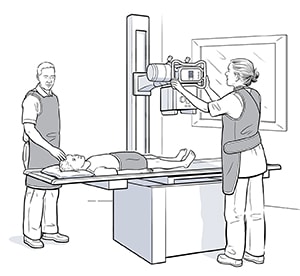
When to contact the doctor
If an injury is mild, your child likely will not remember it for very long. But if your child keeps complaining of pain, see your child's doctor. Also call the doctor anytime an injury causes:
- Serious swelling.
- Localized tenderness.
- Limping.
- Redness.
- Warmth.
- Ongoing night pains.
Treating an injury
If a bone or growth plate is damaged, your child may need to use crutches to take weight off the injury as it heals. In the case of fracture, your child may need to wear a cast, boot, splint, or brace to hold the bone in place during healing.
Featured in
Online Medical Reviewer: L Renee Watson MSN RN
Online Medical Reviewer: Raymond Turley Jr PA-C
Online Medical Reviewer: Thomas N Joseph MD
Date Last Reviewed: 07/01/2023
© 2000-2026 The StayWell Company, LLC. All rights reserved. This information is not intended as a substitute for professional medical care. Always follow your healthcare professional's instructions.