Fibroids are lumps (growths) of muscle tissue. They can form in the wall of the uterus (womb). Fibroids are very common. They are almost always not cancer (benign). The cause of fibroids is not known. But they may run in families. Also, changes in female hormones may cause them to grow over time. After menopause, fibroids may stop growing or shrink.
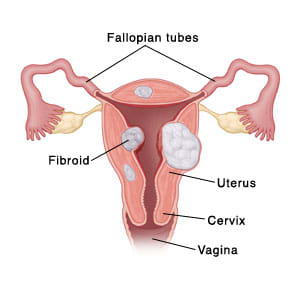
Fibroids may or may not cause symptoms. This depends on many factors, such as their size, the number, and where the fibroids are. If symptoms do occur, they can include:
- Heavy bleeding. In severe cases, this may lead to low red blood count (anemia).
- Painful periods.
- Feeling of fullness, swelling, pressure, or pain in the lower belly (abdomen) or pelvic region.
- Low back pain.
- Frequent urination.
- Constipation.
- Pain during sex.
- Problems getting pregnant or problems during pregnancy.
If fibroids are suspected, your doctor will examine you to help understand the size of the problem. This can include a health history, physical exam, and tests. Based on the results, treatment can be planned, if needed.
Until more details are known about your problem, you may be given guidelines similar to the home care instructions below.
Home care
- To help control pain, over-the-counter pain medicine may be advised. Take these only as directed by your doctor.
- If you have heavy or painful periods, keep a log of your menstrual cycle. Share the log with your doctor. The information may help them decide if your symptoms are from fibroids or another cause.
- Make some lifestyle changes. This may include losing excess weight, being more active, or eating less red meat. These changes may help lower the risk of fibroids in some people. They may also help improve overall health.
Follow-up care
Follow up with your doctor as advised. If testing was done, you'll be told the results when they are ready. Call your doctor if you haven't heard anything and it's several days after the testing was done.
Treatment options for fibroids may include medicines or procedures to help shrink the fibroids or keep them from growing. In severe cases, surgery may be needed to remove fibroids or to remove the uterus. If you have fibroids but no symptoms, you may not need treatment at all. But your doctor may advise regular follow-up to check fibroid size and growth.
When to contact your doctor
Contact your doctor right away if:
- You have heavy bleeding or painful periods that continue or don't get better with treatment.
- You show signs of anemia such as extreme fatigue, pale skin, shortness of breath with little exertion, or rapid heartbeat.
- You have weakness, dizziness, or fainting.
- You have severe pain in the pelvic or belly region.
- Your belly is swollen or enlarged.
Featured in
Online Medical Reviewer: Daniel N Sacks MD
Online Medical Reviewer: Donna Freeborn PhD CNM FNP
Online Medical Reviewer: Louise Cunningham RN BSN
Date Last Reviewed: 07/01/2025
© 2000-2026 The StayWell Company, LLC. All rights reserved. This information is not intended as a substitute for professional medical care. Always follow your healthcare professional's instructions.