Endometrial ablation is a type of surgery. It can reduce or stop heavy menstrual bleeding. Ablation destroys the lining of the uterus. Surgery takes less than an hour. It is an outpatient surgery. This means you can go home later that day.
Who is it right for?
This surgery is OK if you:
-
Do not plan to get pregnant
-
Are not in menopause yet
It should not be done if you have either of these:
-
Endometrial hyperplasia
-
Uterine cancer
Getting ready for surgery
-
Your healthcare provider may advise you to have other procedures first. They are to look at the inside of your uterus before the ablation is done.
-
Follow instructions for not eating or drinking before the surgery. This is to help prevent problems with anesthesia.
During surgery
-
You will be given anesthesia so you stay comfortable and relaxed. You won't feel pain during surgery.
-
Your uterus may be filled with fluid. This puts pressure on the lining to help reduce bleeding. It also helps your healthcare provider see inside your uterus.
Ablation can be done in 2 ways. Your provider will choose the device that’s best for you. The methods are:
-
Method 1. Your provider may put a small telescope-like tool through the cervix. This scope may be connected to a video screen. This helps your provider see and control the ablation process. At the end of the scope is a tiny device. The device uses heat, extreme cold, or electric current to destroy the uterine lining.
-
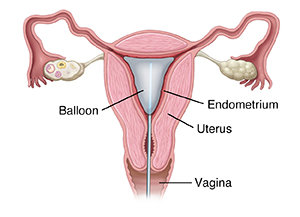
Method 2. Instead of the scope, your provider may use another device that both expands and destroys the uterine lining. It also uses heat or other energy to destroy the lining of the uterus.
Your recovery
-
You may have cramping or aching in your belly (abdomen) after surgery. Your healthcare provider can give you pain medicine.
-
You may have bleeding or watery discharge for days or weeks. Use sanitary pads, not tampons.
-
Don’t have sex or play active sports for 2 weeks after surgery.
-
You can likely return to work in 2 days.
-
Ask your healthcare provider what birth control to use after ablation.
-
Schedule a follow up visit to check how well you are healing.
When to call your healthcare provider
Call your healthcare provider if you have any of these:
-
Chills
-
Fever of 100.4°F (38°C) or higher, or as advised
-
Peeing often for 24 hours
-
Heavy vaginal bleeding
-
Nausea
-
Belly pain that does not go away
-
Belly pain that gets worse
-
Shortness of breath
Featured in
Date Last Reviewed: 12/01/2022
© 2000-2025 The StayWell Company, LLC. All rights reserved. This information is not intended as a substitute for professional medical care. Always follow your healthcare professional's instructions.