Exercise is great after pregnancy. It can make your body stronger and give you more energy. It can improve your mood and your sleep. And it can help get rid of stress. Here are some tips for how you can exercise safely.
When can you start?
- Ask your doctor how soon you can start exercising after the delivery. If you had a vaginal birth with no problems, you can likely start a few days later. Or you can start whenever you feel ready.
- If you had a complicated delivery or a C-section, you may have some restrictions. Talk with your doctor. Your body will need to recover and heal. You may be able to do some light walking or stretching in the first few weeks. But it will likely be about 4 to 6 weeks before you can start regular exercise again.
Getting started
When you're ready to start exercising, follow these tips:
- Start out slowly. Your body has just been through its biggest workout ever. So start with a low-impact activity. And don't overdo it.
- Aim to be active for 20 to 30 minutes on most days of the week.
- It may be easier to break this up into shorter chunks of time. For example, try 10 minutes of activity 2 or 3 times a day.
When you're first working out, try these activities:
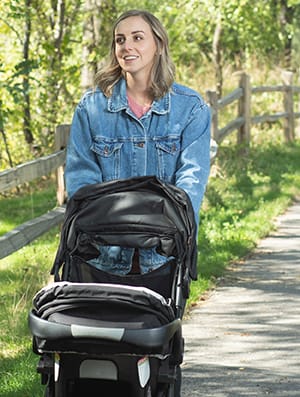
- Take a walk. Walking is a great, low-impact way to ease back into exercise. You can even take your baby with you in a stroller. Want some company? Ask a friend to walk with you. Or see if there is a local walking group for new parents.
- Join a class. You might find it fun to work out with a group. Check out your local community center or gym. They may offer swimming. Or they may have classes just for new parents.
Once you are actively working out again, experts advise that healthy adults get at least 150 minutes of moderate-intensity aerobic activity each week. Try to exercise 20 to 30 minutes on most days of the week.
Exercises that help make muscles strong target certain muscle groups. These include the arms, legs, and hips. Get your doctor's okay first. Then add these kinds of activities at least 2 days a week. Examples include:
- Kegel pelvic floor muscle exercises. These help reduce urinary and bowel incontinence after birth.
- Yoga.
- Pilates.
Breastfeeding and exercising
Doing low-intesity or moderate-intensity exercise won't affect your breastmilk. You will still make the same amount of milk.
In some cases, high-intensity workouts may raise the lactic acid levels in breastmilk. This can make the milk taste sour. Some babies may not like the taste.
It's best to nurse your baby or pump your milk before you exercise. This prevents you from having painful and very full (engorged) breasts when you work out. And it can prevent any possible problems with lactic acid.
Helpful tips
- Start slowly. Don't overdo it.
- Try walking each day.
- Drink plenty of water.
- Wear a bra with good support.
- Wear nursing pads if you're breastfeeding. These are helpful if you start to leak breastmilk.
- Stop right away if you have any pain when exercising.
Workout intensity
Moderate-intensity aerobic exercise. This type of activity makes your heart beat faster. But you can still talk while doing it. Examples include:
- Brisk walking.
- Water aerobics.
- Biking slower than 10 miles an hour on a flat surface.
High-intensity aerobic exercise. This type of activity pushes your body more. You'll start to sweat. And it's hard to talk without getting out of breath. Examples include:
- Running.
- Swimming laps.
- Biking 10 miles an hour or faster.
Featured in
Date Last Reviewed: 09/01/2025
© 2000-2026 The StayWell Company, LLC. All rights reserved. This information is not intended as a substitute for professional medical care. Always follow your healthcare professional's instructions.