The placenta is an organ that grows in the uterus in pregnancy. It sends the developing baby nutrients and oxygen. It also removes waste from the baby's blood. When the placenta grows too close to the cervix or over the cervix, it's called placenta previa. The cervix is the opening at the bottom of the uterus that leads to the vagina. The placenta may block part or all of the cervix. This may happen in the second or third trimester. It can cause blood loss. It can also cause preterm labor.
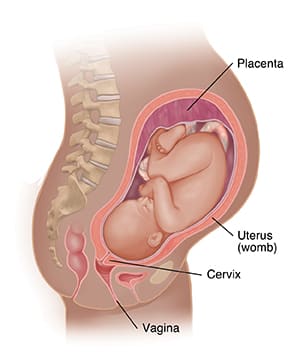
There are three types of placenta previa:
- Complete. The placenta fully covers the cervix.
- Partial. The placenta is partly over the cervix.
- Marginal. The placenta is near the edge of the cervix.
What puts you at risk for placenta previa?
You are more likely to have placenta previa if you have:
- A multiple pregnancy (carrying more than one baby).
- A past pregnancy and birth.
- Fibroids removed through an incision in the uterus (myomectomy).
- A C-section scar low and close to the cervix.
- A history of smoking cigarettes.
How is placenta previa diagnosed?
Placenta previa can cause bleeding in the second or third trimester. This doesn't cause pain. If this happens, an ultrasound can confirm the problem. But it may not cause bleeding. Your doctor will look at the position of the placenta at routine ultrasound exams.
How is placenta previa treated?
The type of treatment you need depends on:
- The amount of bleeding.
- The type of placenta previa.
- The stage of your pregnancy.
Treatments may include:
- Part-time or full-time bed rest.
- Blood transfusions to replace any blood that you lost.
- Medicines to help mature the baby's lungs.
- Medicines to prevent preterm labor.
- C-section. This may be done right away if bleeding can't be stopped.
Even if you aren't on bed rest, you may be told to restrict your activity. You will likely need to:
- Not have sex.
- Limit travel.
- Not have pelvic exams.
How can you get support?
It can be stressful and scary to be diagnosed with a problem in pregnancy. It may help to join a support group for people who are going through the same problem. Ask your doctor to help you find a support group in your area. Or look for a support group online.
Online Medical Reviewer: Donna Freeborn PhD CNM FNP
Online Medical Reviewer: Heather Trevino
Online Medical Reviewer: Irina Burd MD PhD
Date Last Reviewed: 10/01/2022
© 2000-2026 The StayWell Company, LLC. All rights reserved. This information is not intended as a substitute for professional medical care. Always follow your healthcare professional's instructions.