Blood or body fluids may have germs (pathogens) that can cause disease. If there's an accident at work involving blood or body fluids these germs can spread. The most common and serious bloodborne germs are the hepatitis B virus (HBV), hepatitis C virus (HCV), and human immunodeficiency virus (HIV). Once these germs infect you, you may become sick. In turn, the germs may spread to your loved ones. The 3 bloodborne germs described below are the most common causes of infections in the workplace. Healthcare workers, emergency responders, public safety personnel, and housekeeping personnel in some industries, have a higher risk of exposure to these bloodborne pathogens.
Bloodborne pathogens can be transmitted through the mucous membranes, such as in the:
-
Eyes
-
Nose
-
Mouth
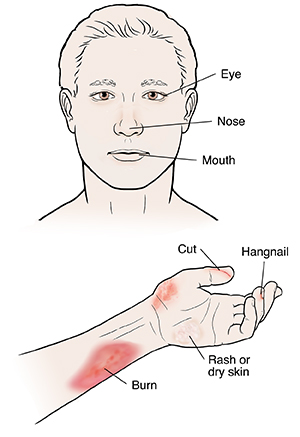
Blood or bodily fluids infected with bloodborne pathogens can enter your system through:
-
Open sores
-
Cuts
-
Abrasions
-
Acne
-
Any sort of damaged or broken skin, such as sunburn, chapped skin, or blisters
Hepatitis B virus (HBV)
-
HBV can cause severe damage to the liver. It can cause life-threatening health issues like liver disease or liver cancer and even lead to death.
-
A vaccine is available to help prevent HBV infection. This vaccine is given as 3 shots over a period of time. The second shot is given 1 month after the first, and the third shot follows 5 months after the second.
-
Adults who aren't vaccinated and are exposed at work to another person's blood or body fluids can be given medicine after the exposure (preferably within 24 hours). This helps prevent infection from developing.
Hepatitis C virus (HCV)
-
Like HBV, HCV can cause severe damage to the liver. Chronic hepatitis C can result in serious, even life-threatening health problems like cirrhosis and liver cancer. It can also lead to death.
-
There's no known vaccine for HCV.
Human immunodeficiency virus (HIV)
-
HIV makes it harder for the body to fight infection. It causes AIDS. This is a serious illness that can badly damage the immune system and lead to death.
-
There's no known vaccine for HIV.
How bloodborne diseases infect you
Bloodborne diseases can infect you when:
-
You help an injured person without using a protective barrier (like gloves or masks) between you and the infected person's blood or body fluids.
-
An object or surface with infected blood or body fluids on it touches your broken skin.
-
You touch your eyes, nose, or mouth with your hands, which have infected blood or body fluids on them.
-
You're accidentally pricked or scratched by a sharp object, such as broken glass or a needle, that has infected blood or body fluids on it.
-
In most work or laboratory situations, bloodborne pathogens are commonly transmitted through:
-
Accidental puncture from contaminated needles or broken glass
-
Contact between broken or damaged skin and infected body fluids
-
Contact between mucous membranes and infected body fluids
-
Online Medical Reviewer: Heather M Trevino BSN RNC
Online Medical Reviewer: Marianne Fraser MSN RN
Online Medical Reviewer: Vinita Wadhawan Researcher
Date Last Reviewed: 08/01/2024
© 2000-2026 The StayWell Company, LLC. All rights reserved. This information is not intended as a substitute for professional medical care. Always follow your healthcare professional's instructions.