STI stands for sexually transmitted infection. This means the infection is spread during sexual activity. Viruses that cause STIs include hepatitis B, herpes, HIV, and human papillomavirus (HPV). Bacterial causes include chlamydia, gonorrhea, and syphilis. Trichomonas, a parasite, is also a common STI. STIs can infect the genitals, mouth, and anus. If they aren't treated, they can spread inside the body and harm the reproductive organs. This can cause a person to be sterile. Sterile means you can’t be a biological parent.
Males may have fewer symptoms of STIs than females. Pay attention to your body. Learn what’s normal for you, and have any symptoms checked out. You can lower your risk for STIs by practicing safe sex. STIs can only be 100% prevented by not having sex (abstinence). Condoms (male or female), used correctly, can help prevent most STIs.
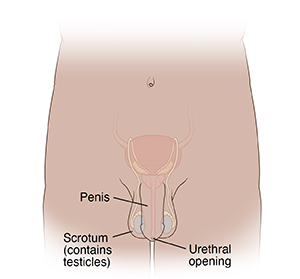
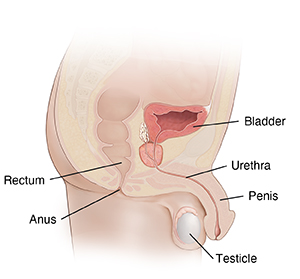
Male genitals
What are the symptoms of STIs?
Common symptoms may include:
-
Discharge (fluid) or a drip from the penis or rectum, which can be yellow, white, green, or clear.
-
Burning, pain, or bleeding when you pee or when you move your bowels.
-
Sores, warts, or blisters on, in, or around the mouth, genitals, or rectum.
-
Lumps or bumps on your genitals.
-
Itching on or around your genitals or rectum.
-
Pain in your genitals or rectum.
What you can do
Keep in mind that you may not have any symptoms. So get checked (screened) if you’re at risk for STIs. Talk with your doctor, school nurse, campus clinic, or local health department for help.
Talk with your partner(s) about STIs and testing. If you have an STI, you will need to encourage your partner(s) to be treated. Otherwise, they can pass the infection back to you, or on to others. But it’s important that you feel it’s safe to have this talk. If you’re afraid of how your partner may react when you talk about testing, don’t talk face-to-face. Instead, send a text, email, or call. Ask for help before you do this if you feel you’re not safe and your partner might hurt you.
Featured in
Online Medical Reviewer: Barry Zingman MD
Online Medical Reviewer: John Hanrahan MD
Online Medical Reviewer: L Renee Watson MSN RN
Date Last Reviewed: 08/01/2025
© 2000-2026 The StayWell Company, LLC. All rights reserved. This information is not intended as a substitute for professional medical care. Always follow your healthcare professional's instructions.