Heat-related illness occurs when the body’s temperature gets too high. Body temperature can be affected by the temperature and humidity of the air and by level of physical activity. To protect your child from heat-related illness, follow the tips on this sheet.
What are the symptoms of heat-related illness?
Heat-related illness can range in symptoms from mild (heat cramps), to moderate (heat exhaustion), to severe (heat stroke).
-
Mild: heat cramps
-
Sweating a lot
-
Painful spasms in muscles during activity or hours later (heat cramps)
-
Tiny red bumps on skin and a prickly sensation (heat rash or prickly heat)
-
Feeling irritable, dizzy, or weak
-
-
Moderate: heat exhaustion
If your child has symptoms of heat exhaustion, call your child's doctor or seek medical care right away. Heat exhaustion can progress to heat stroke. If symptoms do not improve or worsen, call 911 right away.
-
Sweating a lot
-
Cold, moist, pale, or flushed skin
-
Dizziness, faintness, or weakness
-
Headache, nausea, vomiting
-
Rapid pulse
-
Painful muscle cramps
-
Severe thirst
-
-
Severe: heat stroke
If your child has symptoms of heat stroke, call 911 right away. Heat stroke is a life-threatening emergency. It has a high death rate if not treated promptly.
-
Little sweating,or may be sweating a lot
-
Hot, dry skin that looks red, gray, or bluish
-
Deep, fast breathing
-
Headache or nausea
-
Rapid, weak, or irregular pulse
-
Feeling dizzy, confused, or delirious
-
Fainting
-
Convulsions or other shaking movements
-
Irritability, confusion, or altered mental status
-
Rapidly rising temperature to over 104°F (40°C)
-
How is heat-related illness treated?
If your child has symptoms of any heat-related illness, follow the instructions below. If your child has symptoms of heat stroke, call 911 right away and follow the instructions below until emergency help arrives.
-
Remove your child from the heat, direct sun, or warm air that is causing the illness. Move your child to an air-conditioned area, if possible.
-
Have the child lie down and raise their feet.
-
Remove excess clothing.
-
Give your child chilled salt-containing fluids, such as a sports drink, to prevent dehydration. Babies can be given a children’s electrolyte solution. If your child won't drink fluids, is vomiting, or appears confused and has more serious signs of heat-related illness, they may need IV fluids.
-
Cool your child quickly using any available method.
-
Apply cool compresses or cold packs on your child’s forehead, neck, underarms, and groin.
-
Use a fan and spray cold water onto your child’s skin.
-
Give your child a bath in cool water to bring down body temperature. Make sure the water is not so cold as to cause shivering.
-
Use a fan to blow cool air onto your child’s skin.
-
How is heat-related illness prevented?
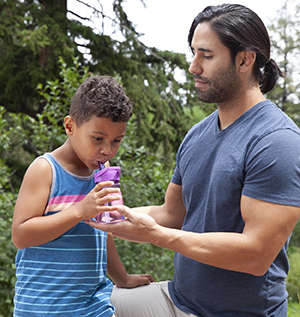
You can do the following to prevent your child from getting heat-related illness:
-
Give your child plenty of fluids to drink.
-
Dress your child in clothing that's right for the weather. Light-colored clothes don't absorb as much heat.
-
Have your child rest and take breaks during exercise or physical activity.
-
Never leave your child in a car, even if the windows are open. Cars can get dangerously hot very quickly.
On hot days, also:
-
Keep your child indoors or in shaded or cool areas.
-
Give your child more fluids than usual.
-
Spray cool water on your child to keep them cool.
-
Dress your child in fewer layers and loose-fitting clothing. Have your child wear a hat or a visor.
-
Do strenuous activities early in the morning or later in the evening. Avoid peak sunlight hours of the day.
Featured in
Online Medical Reviewer: Chelsey Schilling BSN RN
Online Medical Reviewer: Stacey Wojcik MBA BSN RN
Date Last Reviewed: 06/01/2025
© 2000-2026 The StayWell Company, LLC. All rights reserved. This information is not intended as a substitute for professional medical care. Always follow your healthcare professional's instructions.