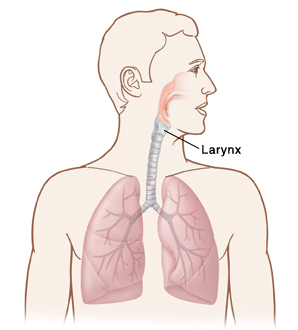
Laryngitis is an inflammation of the voice box (larynx). Symptoms include a hoarse (scratchy) voice. Or your voice may be gone for a few days or longer. This condition may be caused by a viral illness, such as a head or chest cold. It may also be due to overuse and strain of your voice. Smoking, drinking alcohol, acid reflux, allergies, or inhaling harsh chemicals may also lead to symptoms. This condition will usually go away in 1 to 2 weeks.
Home care
-
Rest your voice until it recovers. Talk as little as possible. If your symptoms are severe, rest at home for a day or so.
-
Moist air may help your symptoms. Try breathing cool steam from a humidifier or breathe air from a steamy shower.
-
Drink plenty of fluids to stay well hydrated.
-
If you smoke, quit. Ask your doctor for resources to help you quit.
Follow-up care
Follow up with your doctor or this facility if you are not better after 1 week. If your hoarse voice lasts more than 2 weeks, you may need to see an otolaryngologist. This is a doctor who treats diseases and disorders of the ear, nose, and throat (ENT). Seeing this doctor is even more important if you have a history of alcohol or tobacco use.
When to get medical advice
Contact your doctor right away if you have:
-
Symptoms that get worse.
-
Severe pain with swallowing.
-
Trouble opening your mouth.
-
Neck swelling, neck pain, or trouble moving your neck.
-
A fever of 100.4°F (38.ºC) or higher, or as directed by your doctor.
-
Symptoms that do not go away in 2 weeks.
Call 911
Call
-
Have noisy breathing or trouble breathing.
-
Are drooling or not able to swallow.
-
Are not able to talk.
-
Feel dizzy or lightheaded.
Online Medical Reviewer: Ashutosh Kacker MD
Online Medical Reviewer: Jessica Gotwals RN BSN MPH
Online Medical Reviewer: Rita Sather RN
Date Last Reviewed: 06/01/2025
© 2000-2026 The StayWell Company, LLC. All rights reserved. This information is not intended as a substitute for professional medical care. Always follow your healthcare professional's instructions.