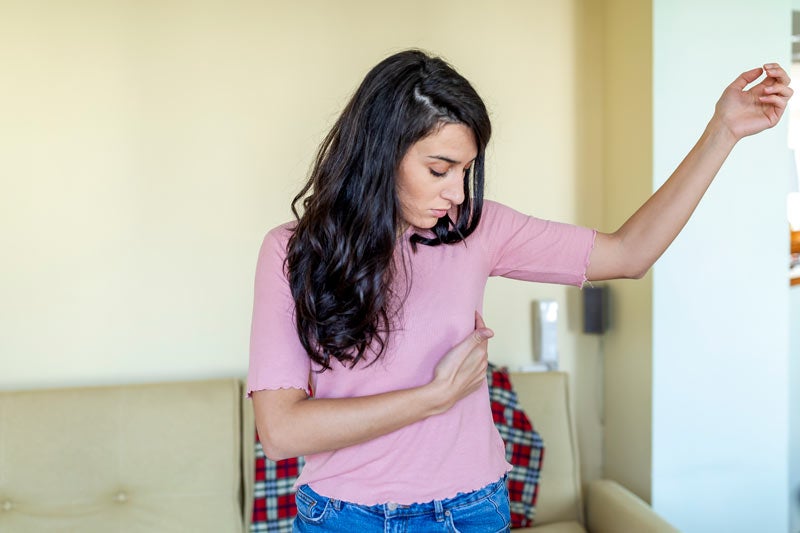
Your breasts change as you go through different stages of your life. It's important to learn what is normal for your breasts. This is called breast self-awareness. The key to breast self-awareness is knowing how your breasts normally look and feel. This helps you to notice any changes.
Many experts now say that people should focus on breast self-awareness instead of doing a breast self-examination (BSE). These experts include the American Cancer Society and the American College of Obstetricians and Gynecologists. Some experts even advise not teaching people to do BSEs. That’s because research hasn’t shown a clear benefit to doing BSEs, and they lead to more biopsies.
Breast self-awareness isn’t about following a certain method and schedule. Breast self-awareness is knowing what's normal for your breasts. That way you can notice even small changes right away. If you see any changes, report them to your doctor right away.
Changes to look for
Contact your doctor if you find any changes in your breasts that concern you. These changes may include:
-
A lump.
-
Nipple discharge other than breast milk, especially a bloody fluid.
-
Swelling.
-
A change in size or shape.
-
Skin irritation, such as redness, thickening, or dimpling of the skin.
-
Swollen lymph nodes in the armpit.
-
Nipple problems, such as pain or redness.
What if I find a lump?
Contact your doctor if you find lumpiness in one breast, feel something different in the tissue, or feel a definite lump. Sometimes the lumpiness may be due to menstrual changes. But there may be reason for concern.
Your doctor may want to see you right away if you have:
-
Nipple fluid that is bloody.
-
Skin changes on your breast, such as dimpling or puckering.
It’s normal to be upset if you find a lump. But it’s important to contact your doctor right away. Remember that most breast lumps are benign. This means they are not cancer.
Featured in
Online Medical Reviewer: Diane Horowitz MD
Online Medical Reviewer: Donna Freeborn PhD CNM FNP
Online Medical Reviewer: Heather M Trevino BSN RNC
Date Last Reviewed: 07/01/2025
© 2000-2026 The StayWell Company, LLC. All rights reserved. This information is not intended as a substitute for professional medical care. Always follow your healthcare professional's instructions.