Most babies and young children love to be held and cuddled. This helps them form close bonds with their parents. It helps them bond with other caregivers, too. But a child who has autism may resist being touched. And they may often seem remote and withdrawn. Some may never learn to talk.
There is no cure for autism. But many children who have it can be helped a lot with intensive treatment. This works best if they are given it early.
What is autism?
Autism spectrum disorder (ASD) is a range of disorders in which a child's brain doesn't develop normally. Autism or autistic disorder is the most severe form of ASD. Symptoms often appear before age 3. And they stay throughout the child’s lifetime. These symptoms can vary widely. They may be mild or severe.
Most people who have autism find it hard to talk and relate to others. They often seem to be in a world of their own. Some children may not respond to smiles or eye contact. They may repeat certain actions over and over. They may follow rigid routines. Or they may be obsessed with parts of objects. A few may even try to harm themselves or others.
Signs of autism
Each person who has autism is unique. Some children who have it may:
-
Be slow in learning to talk. Or they may not learn to talk at all.
-
Want to be alone rather than with others.
-
Not share and play the way other children do.
-
Be sensitive to sounds, touch, smells, or tastes.
-
Do repeated body movements. They may rock, sway, dip, or walk on tiptoe. Or they may flap or twist their hand or finger.
-
Get upset by slight changes in a routine.
-
Throw tantrums. Or they may try to harm themselves or others.
Who does it affect?
Boys are 4 times more likely to have autism than girls. Autism is found in all ethnic, economic, and social groups. Any child can have it.
What causes it?
Parents of children who have autism often blame themselves. But autism is no one's fault. Some genes may affect the way your child's brain develops. Other things may play a role. These include viruses or chemicals.
What can help?
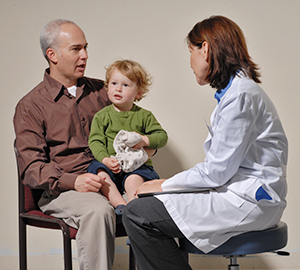
Early assessment and help is crucial for a child who has autism. This is because a child learns best when they're very young. The American Academy of Pediatrics advises that all children be screened for autism at the 18- and 24-month well child visits. This is in addition to regular developmental checks. This helps find children who have behavioral and developmental challenges as early as possible. With early help, special therapists can help your child learn social and language skills. School programs can be tailored to your child's needs. As your child gets older, many caring professionals can help. Talking to your doctor is a good place to start.
Featured in
Online Medical Reviewer: L Renee Watson MSN RN
Online Medical Reviewer: Marianne Fraser MSN RN
Online Medical Reviewer: Paul Ballas MD
Date Last Reviewed: 06/01/2025
© 2000-2026 The StayWell Company, LLC. All rights reserved. This information is not intended as a substitute for professional medical care. Always follow your healthcare professional's instructions.