A spinal tap (lumbar puncture) may be used to help diagnose certain problems in your brain or spinal cord. Prepare for your test as instructed. You may be asked to stop taking aspirin, nonsteroidal anti-inflammatory drugs (NSAIDs), or blood thinners a few days before your test. From start to finish, your spinal tap will take about
During the test
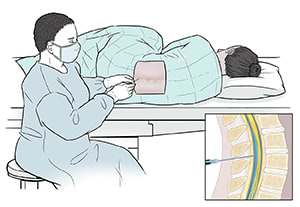
You will lie on your side with your knees drawn into your chest. (This is called the fetal position.) Or you may be asked to sit bent forward, with your chin down. First, your low back will be wiped with a special disinfectant. Then your skin will be numbed with a medicine (local anesthetic). The doctor will insert a sterile spinal needle through the skin of your lower back until it reaches the sac that contains the cerebrospinal fluid (CSF). You may feel some pain or pressure when this happens. It is important to stay still during the test. Some spinal fluid will be taken out through the needle. The needle is then removed. Finally, a small bandage is placed over the skin puncture site. You may be asked to lie still for a short time before you leave.
After the test
- When you're able to leave, have an adult family member or friend drive you home.
- When you get home, rest lying down for a certain period of time as directed by your doctor.
- If you get a headache, lying flat and drinking plenty of fluids may help relieve it. Often the headache is more painful when you stand. It gets better over time. You may also want to take an over-the-counter pain reliever as advised. But don't take aspirin. Caffeine drinks may help relieve a headache after a spinal tap. These include soda, coffee, or tea. A headache may also occur with an upset stomach (nausea), vomiting, or dizziness.
- The day after your spinal tap, you can remove your bandage.
- Your doctor will tell you when your test results are ready.
Contact your doctor if you have:
- A severe headache or a headache that lasts
2 or more days - Double vision
- Pain in your back that doesn't go away
- Tingling in your groin or legs
- Fever
- Change in bowel or urination functions
- New symptoms or symptoms that get worse
Online Medical Reviewer: Anne Fetterman RN BSN
Online Medical Reviewer: Marianne Fraser MSN RN
Online Medical Reviewer: Rita Sather RN
Date Last Reviewed: 03/01/2024
© 2000-2026 The StayWell Company, LLC. All rights reserved. This information is not intended as a substitute for professional medical care. Always follow your healthcare professional's instructions.